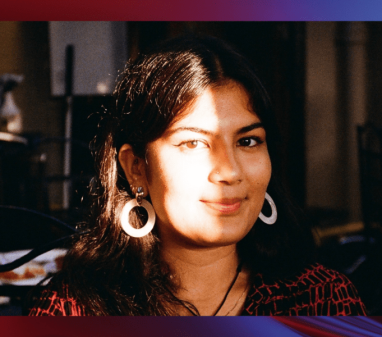
Made in Ethiopia is a feature-length documentary, directed by Max Duncan and Xinyan Yu, which explores the lives of three women at the brink of change, as the proposed development of an industrial park presents them with different opportunities. Max Duncan, filmmaker and journalist, spoke to Asma (Policy Researcher) on his experiences of working within China, the discourse surrounding China-Africa relations, and the multifaceted themes of the documentary.
Asma: To begin, could you share a bit about your journey into video journalism and filmmaking? And what initially drew you to work in China specifically?
Max: I’d always been interested in China since I was really little, actually. I was just obsessed with Chinese food, I think a general interest in China grew from there.
I was doing a Fine Art degree in Brighton when I decided that I definitely didn’t want to stay in the UK and continue on the artist trajectory— I really wanted to do something outside of the UK, and China was growing so fast at that time. There was a lot of reporting and books coming out about China and it seemed like an extraordinary place to go to and see what was going on.
I learned Chinese in an evening class, and applied for the British Council Teaching Programme to be a language assistant in China. I was placed in a middle school in Tianjin teaching oral English and I absolutely loved it. Tianjin was a great place to be based.
I just had such a great time that I wanted to stay, and get back into documentary rather than necessarily just journalism. I studied Chinese at Peking University and then applied for an internship at Reuters News Agency; even though documentary was my primary interest, it was the year of the Olympics so there was so much demand for help with news coverage of everything that was going on. So, I very quickly became part of video department of Reuters which turned into a job and an accreditation, and I stayed there for six years. After that I moved into independent filmmaking for two more years before leaving China.
Asma: I studied Chinese Studies, and around 2020 the topic of China’s engagement in Africa began gaining more attention in academic circles. When did you first become very aware of China-Africa relations, and what inspired you to explore this subject through film?
Max: When I was still at Reuters. I did two stories on China and Africa, but it was about Africans in China.
When you are a video journalist at a news agency such as Reuters, you usually do straight forward news packages— almost like IKEA furniture. You make a kit, sell it to a subscriber like the BBC or Sky, and they put together a script using your video and information. Much of the footage you see on the BBC will be produced by someone who works for an agency, but they wont usually be credited on screen
These media companies rely very heavily on video agencies, which is great because it often means you’ll be the first on the ground, the first line of journalism— but you won’t get the ‘glory’ Alongside this, you rarely get the opportunity to tell a longer, or more polished story.
My former boss used to run a special feature that Reuters had called ‘Africa Journal’. They did packages about Africa-related news in China. For me, this was an opportunity to do longer packages.
I did one story about a football team in Beijing called ‘Africa United’, a pan-African football team. They had players from all over Africa that were all playing in Beijing.
My other voice package was about professional young Africans looking to China rather than Europe or America for opportunities. We interviewed this really cool young journalist, Vimbayi Kajese, who was from Zimbabwe, and the first black African CGTN news presenter in China. We also interviewed some young business people. This was definitely the time where we were hearing more about Chinese investment in Africa.
It’s important to remember that China has been investing in Africa for a very long time. There are early projects like the Tazara Railway which the Chinese built in 1976 between Zambia and Tanzania, to help get resources, especially Zambian copper, out to the coast as the country was blocked by apartheid South Africa and Zimbabwe. Zambia wanted Western countries to help them build a railway, but they all said, ‘no’. They then went to China, and China agreed, and built them this very symbolic railway.
There’s a lot of solidarity between China and African countries. China supported many independence, post-independence, and post-colonial movements. It’s something that’s rarely discussed in Western media or discourse. They think China has just appeared on the scene and ‘pillaging’ the continent for all of its minerals. But it’s a much more complicated picture.
It was a giant shoe company that got me interested in making Made in Ethiopia though. It was a signature company in the industrial park that we later ended up filming in. This company was such a striking example China taking the next step in globalisation, and instead of Western, Taiwanese or Korean companies going to China to manufacture, Chinese companies were going to Africa for manufacturing. That sparked a lot of interest and received plenty of media reporting.
At that time, I pitched to my boss to do a story in Ethiopia but he didn’t agree— it was slightly ambitious to fly off to Ethiopia to do a news story. But once I went freelance, I started researching it more. Ethiopia became the natural country to look at, because there was so much Chinese investment, and there was talk on how Ethiopia was growing very fast. Their GDP growth was around 10% annually, they were considered the China of Africa, or an Asian tiger, but in Africa.
After doing a research trip, I saw there was a lot going on in the region too.
 Asma: For those who haven’t seen it yet, could you give us a brief synopsis of the documentary?
Max: Made in Ethiopia is a feature documentary that follows three different women through the expansion of one massive Chinese industrial park in Ethiopia.
Asma: Was there a particular reason behind the film centring itself around three women?
After the research trip , my co-director Xinyan and I started developing the project together. We initially cast the net very wide, and were looking at all kinds of stories and protagonists.
Once we focussed on the industrial park, we still didn’t limit ourselves to only focussing on women, but it happened quite naturally. First, there was Motto, an extraordinary woman who is the director of the industrial park. Seeing this one woman in a kind of sea of men was exceptional.
When you look at the workers, 70, 80% of the workers in the industrial park are women, which is not unique to this specific industrial park or to the garments industry in general. In Bangladesh, the majority of garment factory workers are women, which was also the case during the Industrial Revolution in England. It was a no-brainer to focus on a female worker.
When we went into the village, we wanted to film a farmer character because of the land appropriation issue around the second phase of the industrial park, and because it was a really important to consider the farming community’s perspective. They are the ones who are meant to benefit through the process of industrialisation, in theory. For them, the stakes are obviously very high as they’re giving up their land. When we in the village speaking to people, someone told us to speak to Wokinesh.
She was very articulate, very elegant. Both her farm and house, not just her land, was going to be relocated or demolished. She was also very keen and confident, so she naturally became another protagonist.
We were definitely happy that we centred around women as we developed the documentary. It was great how their stories started speaking to each other once we got to the edit. They became a triangle, representing the different stages of the industrial process, and the different class views.
Frankly, it’s just very rare to see stories about business or development told through female perspectives.
Asma: I really admired the film’s balanced perspective. The story rejects forming simple binaries and challenges some stereotypes or assumptions that audiences would have. For example, Wokinesh expresses a desire for ‘modernisation’ and says that rural life is very difficult, whereas some may be under the impression that foreign investment like this only serves to ruin rural traditions against the will of the people. It was quite impressive that all of these different narratives were all weaved into the same story.
Max: Thank you. It’s interesting because it seems surprising to an audience that you would have a strong representative from a rural community who actually wants industrialisation. But in some cases, it’s very similar in a lot of developing countries, where women are often the first to express desire to leave village if they can. They’re often bound into patriarchal communities where they don’t have much autonomy from their husbands, or mother-in-laws. It’s not that surprising when you put yourself in their shoes that they might actually be quite keen to leave that aspect of tradition.
But within the rural community, we haven’t painted a binary because there are those in the community, including Wokinesh’s own husband, who are much more keen on holding on to their land as it gives them security and a sense of cultural identity and pride.There is an intrinsic conflict within those communities and even within families, which we wanted to express.
In terms of a bigger picture, viewers certainly see problematic behaviour from all sides: for example, the land transfer wasn’t handled well, and it’s not just the local government that’s responsible for it. But in Western media in particular, there is often one tone of the stories related to China and Africa, which are about exploitation, nothing else. Even from a logical perspective, it can’t be that all of these African countries have zero agency, it can’t be that China is a monster controlling the whole continent—it’s got to be more than that. Otherwise, the activity between China and Africa wouldn’t be happening to the extent that it is— China presents a huge opportunity.
Every country needs to think carefully about who they do business with, how, and on what terms. But in the end, China knows industrialisation better than the West knows it. They’ve got recent firsthand experience. And as you can see in the film, Chinese investors are prepared to go to Africa and pull up their sleeves to work alongside them, in a way that you don’t see so much from European or American countries.
China has an awful lot to offer. and I think that’s very rarely presented. It’s seems like it’s always the problems that are that are focussed on.
If you take Ethiopia for example, it may be a more successful example of a balanced partnership than some other African countries, but Meles Zanawi, who was the Prime minister of Ethiopia in the early 90s, went to China to say, ‘we want to do what you have done, why don’t you invest in Ethiopia? Come and have a look.’
China obviously has strategic interests in Africa, but its two-way relationship. Ethiopia is a sovereign country, it could not have happened in any other way.
Asma: There’s a phenomenal drone shot of a road with green fields either sides that pans over to the factory in the distance, and all the scenes with the beautiful tree, which felt symbolic. Despite the film showing a very balanced perspective and not declaring an antagonist or protagonist, I do think a clear ‘loser’ was shown in the film – the environment and natural world. Was that an intentional thread in your storytelling?
Max: Interesting. The environment is definitely the loser in the process of industrialisation, it’s rarely the first consideration. The second phase of industrial park would have put concrete over farmland and ruined the natural biodiversity. That was something we wanted to point out quite clearly in the film.
We tried to focus on the beauty of the trees, the insects and bird noises, and also the spiritual significance of the tree – the community doesn’t worship the tree itself, but a spirit within the tree that represents a kind of community spirit, so the significance extends beyond just the tree alone.
That’s something we wanted to highlight— not just to say industrialisation is wrong, as all developed countries have elected to walk that path. Rather, we want to say that something is really lost, and whether we can preserve it this process? What are we prepared to give up in the pursuit of “progress”?
These are very important questions that have a universal value. All countries, including China, consider the environment much more than they did a few years ago. This is because they can afford to in a way. The environment in China is so depleted that they are forced to think about what’s been lost and what we can still preserve.
Asma: I heard the film premiered in Ethiopia and that the Chinese ambassador attended the screening. That must have been an incredible moment. What was that experience like for you and the team?
The ambassador came for the last part of the movie and for the Q&A, but to have Chinese ambassador attend, and to have a conversation with him afterwards about the themes, and for it all to be taken seriously, was really great. It’s not something that’s easily achieved at all. Especially in the current political climate, that was something that we really appreciated.
There was an event held by the British Embassy too, where around 15 staff members from the Chinese Embassy staff came. They could watch and discuss the film in a more private and safe environment.
We were really happy about that because when you think about the impact of a film, you want to engage all sides, and sometimes that can be very difficult.
Asma: In the film, Motto says most Ethiopians won’t achieve their dreams, and Beti mentions that she doesn’t follow dreams anymore, she just follows life. The Mayor Teshome also isn’t able to fulfil his dreams of developing the City park. Would you say one of the central themes of the documentary is the tension between the pursuit of happiness or wealth, and the more sobering realities of everyday life?
Max: I think so. We also represented this idea of the dream and the reality through Motto’s ‘princess’ dress. She sort of managed to achieve that dream. It may sound absurd, but her dress is an interesting symbol of personal fulfilment. Economic progress isn’t just about getting money, it’s also about being able to do things that you didn’t think were possible for yourself before.
Say what you like about China’s system, one way or another, from around the 90s to now, they managed to actually create the conditions for people to have an aspiration and in many cases, be able to achieve it. That’s the situation in Ethiopia at the moment— you’re telling people that in the process of industrialisation, you will have to make a sacrifice, but it’s worth it in the end as we’re all going to get closer to our dreams. When Beti says, ‘we don’t follow our dreams’, she doesn’t see a future that she can rely on, because she can’t save enough money or there isn’t stability, or she doesn’t believe she will be able to enjoy the fruit of her labour.
That brings us back to the question, who is this all in service of? It’s great to create a jobs and to build the economy, but if it’s not in service of the farmers or the workers, the people making sacrifices, then what is it for in the end? That’s one of the big questions that we wanted to explore.
Asma: The wedding at the beginning of the film sets a particular tone and, in some ways, lures the audience into making stereotyped opinions that are later questioned in the film. How did you come to be invited to film that wedding, and what made you decide to open the documentary with it?
Max: What impression did it give you?
Because the scene shows Chinese men marrying Ethiopian women, and presenting wads of cash to parents in-law, it brought me to make a knee-jerk assumption of the power dynamic that’s happening between these two people, and perhaps between these two countries. As you keep watching documentary you’re forced into having a more nuanced opinion.
Max: That’s quite a good reading. The opening scene of a film is often the hardest, and we spent a long time thinking about how we would open this film. We’d been invited to two weddings on consecutive weekends, from couples within the same factory. Perhaps this scene is quite on the nose as a metaphor— yes, it’s a marriage between two people from two different countries, is it a marriage of two countries? Is it a marriage of love? Is it a marriage of convenience? Is it a marriage equal power, is there a power imbalance?
The money, for example, is quite common in many countries. It’s culturally not abnormal to do that. But by including it, we want to be a little bit provocative and ask that question.
The problem with that scene is that many people ask, ‘what happened to the bride and groom?’. They thought that the film was going to be about them and then they’d never meet them again. I can say they actually they had a child in Ethiopia.
For more informatiom about Made in Ethiopia, please visit its official website.