
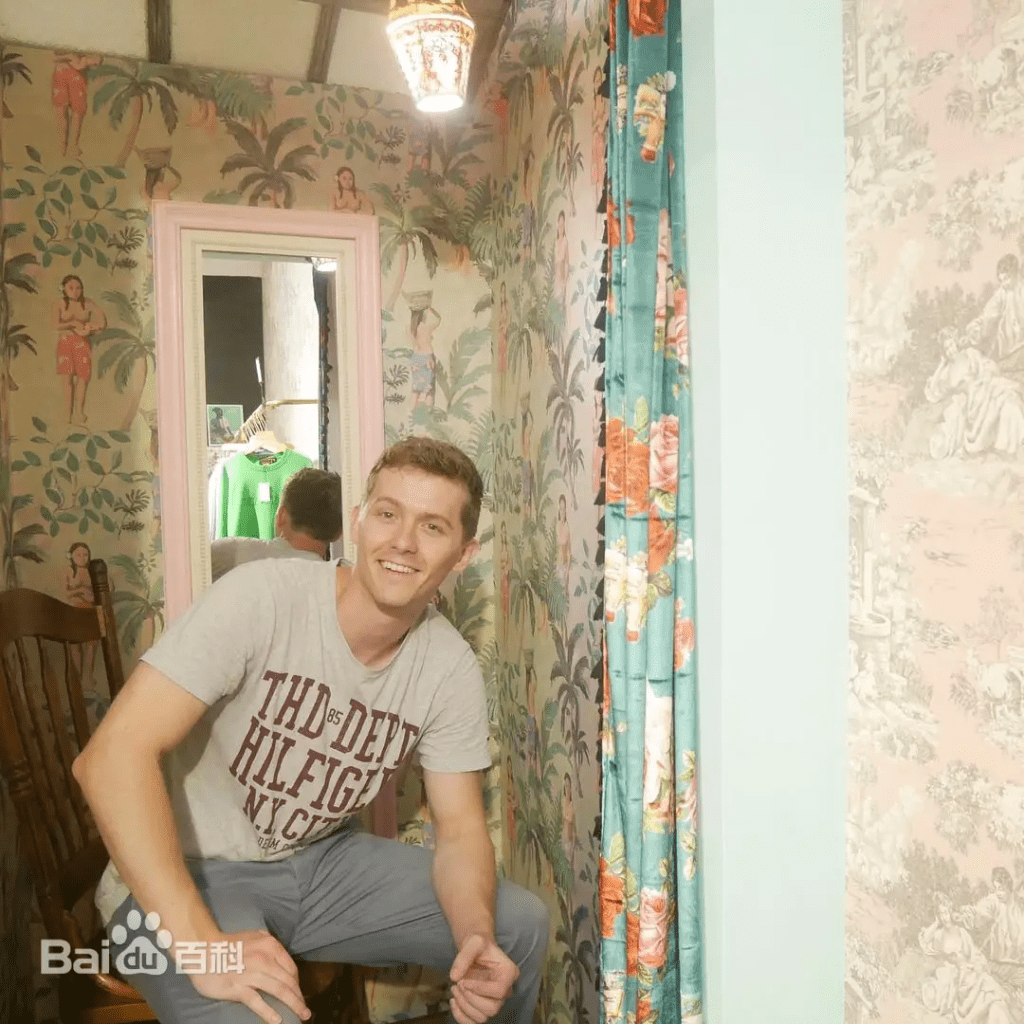
Stuart Forbes (付博文) is a British actor who has lived and worked in China for over a decade, with a career spanning across TV, film, social media, and short-from vertical dramas. This remote interview took place on an early evening in Shenzhen when, despite getting stuck in traffic and caught in the rain, he ducked into a tea bar to take this call over a cold jasmine tea.
When did you start acting, and how did you know it was what you wanted to do?
I felt from a young age that acting was something I was interested in, but besides a couple school plays here and there, it’s something I didn’t seriously pursue until I was already in my mid-twenties.
I thought a good day to get into it would be to just start with something small, like short videos on social media, and it turns out my inkling was somewhat correct. I think a lot of actors find it difficult to get material for showreels—it’s that classic dilemma where you need experience to get a job, but how can you get experience without having a job? The best way to do that is to just start doing things yourself.
I was lucky to be able to find a team of people to collaborate with, and we were able to make things of relatively high quality for the time, these social media videos, and put them out there. From there, I not only had some good material to show agents and casting directors, but it also boosted my profile a little bit. From there, I got into acting after getting to know a few more people in the industry.
So you were making short video content in the mid-2010s—that seems to have anticipated social media trends at the time.
Yes, that would have been 2016, so this was just before TikTok was a thing, before Douyin was even a thing. I started making content for Weibo, and we were making TikTok videos when it first came out, pretty much.
How did your career move to China and Chinese platforms?
I was in the UK until I was 22 years old, teaching as a learning support assistant for children with special needs. I knew I wanted to work abroad just to try experiencing a different culture. Since I already had a background in education, I decided to apply for a job as a teacher in Hong Kong, and ended up getting it. So I started to teach English in kindergarten in Hong Kong, and I did that for roughly two years before I decided I wanted to switch industries and get more skills.
What better skill to have at the moment than learn a language, especially a big, important language like Chinese? That’s what prompted me to move to Shenzhen. It’s right next door to Hong Kong, and they have a few good universities here. I went to Shenzhen Uni, which turned out to be a great choice. Some friends I’d made in Hong Kong had done the same thing. I went to Shenzhen Uni, studied Chinese for a year, and began to work in mainland China after that.
From your perspective, how have things changed in China since you first arrived?
For sure it has changed. You don’t notice some of it because it’s a gradual process, but back when I first arrived, WeChat Pay had only just become a thing, and even DiDi was just about to be released. Back then, you could still get an Uber in China, when Uber and DiDi were still competing. This was around 2014, the first wave of a lot of this stuff. The waimai (takeout) apps were getting more popular, and it had just started to switch over from the QQ era to WeChat. A lot of the social media, as we know it today, was still in its relative infancy with Weibo and now TikTok. And we’ve even moved on from that to a certain extent—we’ve got Shipinhao (WeChat Channels) and Xiaohongshu (RedNote), all these different things. On the apps and tech side, it’s been a huge transitional period.
In Shenzhen, the development’s been crazy in both things like the metro system, but also the people. Sometimes, I think it’s them that are changing—but now I reflect on it, it’s more likely that I’m changing. If I think to myself, ‘they’re becoming more Western’, the reality is, maybe I’m just becoming more Chinese, and we’re converging.
Those transformations in technology and urban life have mirrored huge changes in your industry. Short-form vertical dramas(duanju短剧, viewed on smartphones in a scrolling format) have exploded in the past few years, and you seem to have caught that wave as well. Could you talk about that shift in the landscape? I think I can speak for a lot of actors here. This has been the way things are for however many years: actors want to do movies, big blockbuster movies. They also want to do television series—these used to not be considered as ‘high level’ as movies, but since the Netflix era, they’ve caught up in prestige. There’s so many actors out there, and we’re all hungry for good work.
In a sense, China’s been good to me, because the TV and movies have stayed roughly consistent throughout the years. It’s not been the bulk of my work, but it’s been a decent amount. I’ve been lucky to get those opportunities. But during COVID, there was more work in advertisements, and now it’s shifted away from advertisements to vertical dramas, which exploded in popularity.
Around two years ago, they had already been popular in China, and they exploded in popularity in the West. I became a part of this wave for a while, and for a couple of years, that became the bulk of my work. I was still doing a TV series or a movie here and there, but I’d be doing a lot more of these vertical dramas.

For a lot of us actors, especially foreign actors here in China, we saw it as a positive development. It gave people an opportunity to do what they like to do, which is acting. You’re spending such a long time on set, you’re getting a lot of hours under your belt consecutively on all these different projects, so it gives you a lot of practice, and the money is nice too.
But a couple of things started to happen. There’s partially this rise of AI, which people are worried about. I’m not so worried about it—I just feel it’s something you’ve got to adapt to. But there’s some people in the industry who are panicking about certain platforms. It’s 50% AI content, and it’s growing in proportion because it’s so much cheaper than doing it with real people. In the vertical space specifically, it’s still going strong, but I’ve seen it take that hit.
For some actors like myself, I’m not taking on as much vertical drama work as I used to. A lot of that is because before, agents weren’t inviting actors from LA or London or wherever, but now they’ve started to do that more and more. I think that’s fine—whatever profession you’re in, as long as the rules are roughly fair, which might sound a bit naive, you can’t be too worried about healthy competition, because that’s always inevitable. If they want to hire people from this place or that place, okay, fine. It’s just a call for me to adapt and either hone my craft more or to find different avenues. For example, social media is another avenue—you’ve just got to be adaptable.
But it comes in waves, and this vertical wave is still near its peak, but I don’t see it staying here for that much longer, from the production perspective. Even if it maintains its popularity, we might not be making as many as we used to, which you’ve just got to roll with.
With the production side at risk, do you think the popularity of English-language vertical dramas will continue expanding outside of China?
It’s already expanded well outside of China, and it’s been that way for a while. I feel like they’ll continue to grow. There’ll obviously still be an avenue for long form content—the irony is, these short vertical dramas, they sort of are long form content, because the total running time is still like a hundred minutes long. It’s like a feature length movie, just different in the way it’s split up and the writing, with cliffhanger endings every couple of minutes.
The growth in popularity, of course, is largely to do with attention spans, and I don’t see attention spans improving any time soon. For me, that shows that these things are still going to be popular.
What is the set environment like? You’ve worked feature films, short films, and serial dramas—is the culture different for short-form dramas?
It’s intense. If you have a major role in a TV series or a film, a lot of those roles are filled by major celebrities, so the production is very mindful of staying within overtime restrictions. Whereas a lot of vertical drama actors are either moderately famous or not famous at all, so if they want to shoot 80 episodes in one week, you’ll be doing consecutively long hours every day.
You mentioned that one avenue to pursue as the industry changes could be getting back into social media and content creation. Where would you like to take that?
I haven’t been active on social media for a number of years now, but recently, I was invited by China Daily to go on this promotion tour of Hubei, to promote cities and attractions in collaboration with the local government. I’m responsible for filming, editing, and posting a lot of this content myself. I see this as a return to social media. There’s many different avenues, but this is the one I’m working on currently.
As an actor, the ideal sort of content that I want to be producing will also use a bit of acting and story-making and doing different characters, because that’s what I’m passionate about.
You’ve got to find your niche, because if your content is amazing or you already have some sort of name for yourself, then it’s more acceptable to post general content. For new content creators, I would recommend really trying to find a niche. And if that niche doesn’t end up working out, that’s okay. Just try another one and keep at it, if it’s something you’re serious about doing.
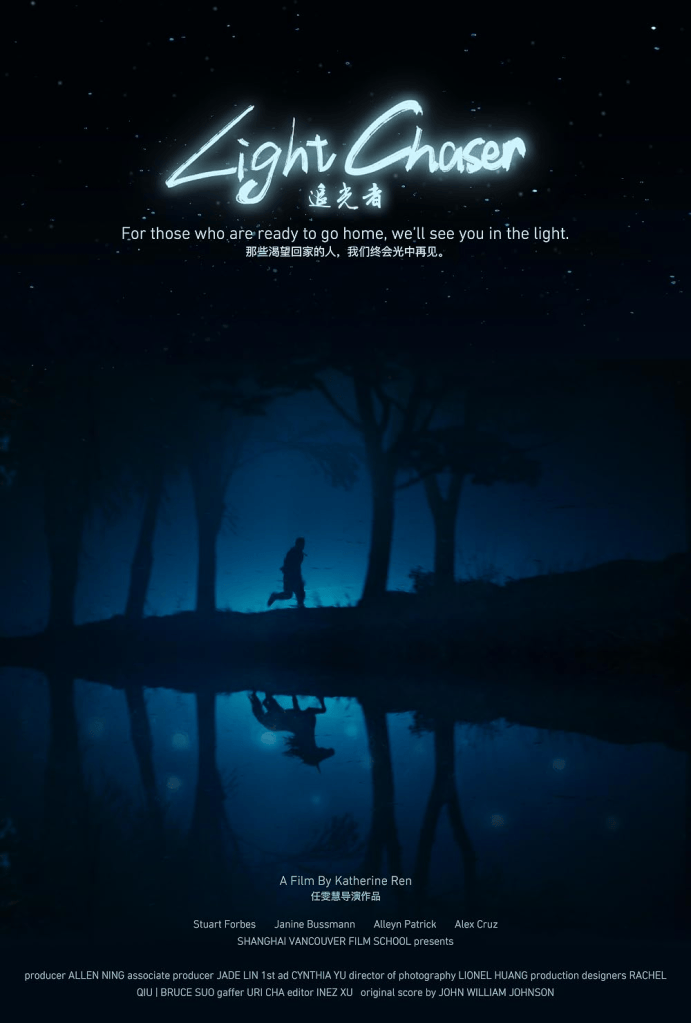
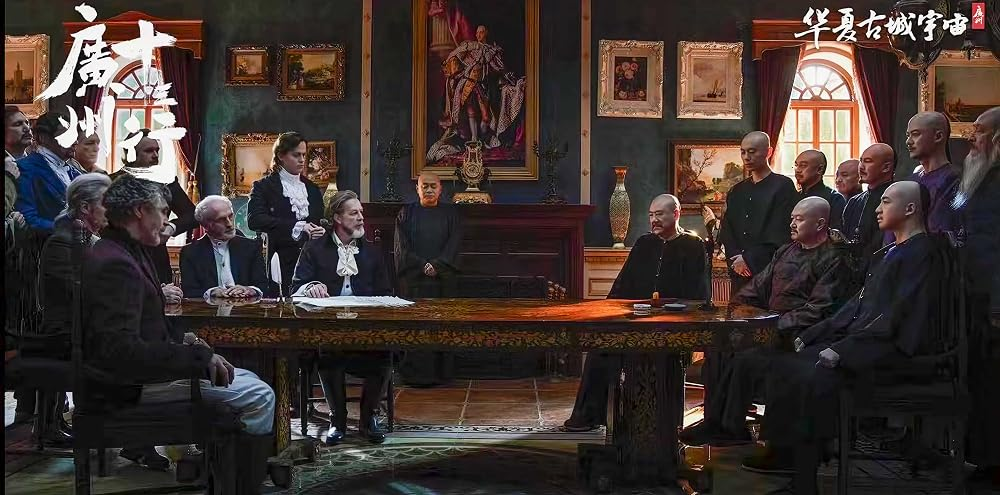
As an actor, your works have spanned across a wide range of tones and genres. The series Escape from the Trilateral Slopes 《边水往事》 (2024) was more harrowing and intense, 13 Hongs 《广州十三行》 is a historical drama, and the short film Light Chasers 《追光者》 (2024) had a fantasy element. What types of projects have you enjoyed trying out the most so far?
As you may know, a lot of foreigners, for various reasons, get cast as bad guys Chinese TV and movie roles. In my case, I also get cast as bad guys, but I’m fortunate to have had more of a mix. It’s roughly 50-50. I do get cast as these good characters too.
Like you mentioned, Escape from the Trilateral Slopes is a very dark story, but my character within it is almost like a beam of light in this dark part of the world. I imagine a lot of actors feel the same way as I do—we want to play very three-dimensional characters and characters who have a bit more of an arc.
With the 13 Hongs of Guangzhou, I’m already interested in historical dramas, and with this character in particular, I had a lot of fun because I got to spend a long time with the production team focusing on building the character. The character does have this arc where in the beginning, he’s a bit more nice and naive, and—I don’t want to spoil it—but you can see his character start to shift as the series progresses. I find these sorts of characters really interesting.
Do you expect there to be any shifts in the variety of roles available for foreign actors in China?
I think it depends on the individual. There’s nothing wrong with earning money doing what you do. I’m in a very fortunate position to be able to do that. However, if you’re the type of actor just turning up to cut a check and make some money, it’s hard to put in the energy and passion that are required to progress in the industry. You’ll find, by no coincidence, that your options tend to be a little bit more limited.
Some people think it’s all about luck, but that’s only partially true. If somebody is really passionate about acting, and even about promoting themselves and all the things adjacent to acting, then they’re going to find not only they get more work, but they get better types and variety of work. And I’m talking over the long term here. Nothing is black and white, nothing’s guaranteed. But generally, those that really put their heart and soul into this sort of stuff, they find that they’re not going to be typecast as much.
Of course, there are people who don’t mind being typecast. I think it’s fine, if you have a fun role, to play that kind of role many times. It’s just personally, I take joy from doing different types of roles. That’s more exciting for me. I require myself to keep pushing myself so that I don’t end up sort of stuck in the same place for too long.
To continue pushing yourself, is there a type of project, genre, or character you haven’t tried before that you’d be interested in taking on?
I’d like to do more sci-fi. I’ve done some sci-fi before, but it’s something I’m very keen on exploring a bit more, mostly because I haven’t done that much. Even the sci-fi roles I have had have been more like historical drama, sci-fi adjacent. Also some more fantasy, I wouldn’t mind.
But really, it’s not so much about the genre, and more about the character. What does the character require? The complexity of the character is independent from the genre, and I just like to challenge myself with more complex characters. That’s the main thing for me.
Where do you hope to take your acting next?
In the future, I’m thinking to do more work in different countries. That’s what excites me at the moment.
It’s a thought I started to have around last year, especially as it’s increasingly popular, as I said before, for foreign actors to come to China to work. Through a dialogue with them and understanding how they work, such as having agencies back in England, it’s inspired me to try and do more cross-border work. The next step is to reach out to agents and casting people in different countries, like the UK and Europe in general, and try to use the experience that I’ve gained over here to get more international work.
You can find more of Stuart Forbes’ work on his IMDb, MyDramaList, and Baidu page.

